

16 September – 24 October 2026
Opening 16 September at 6:00pm
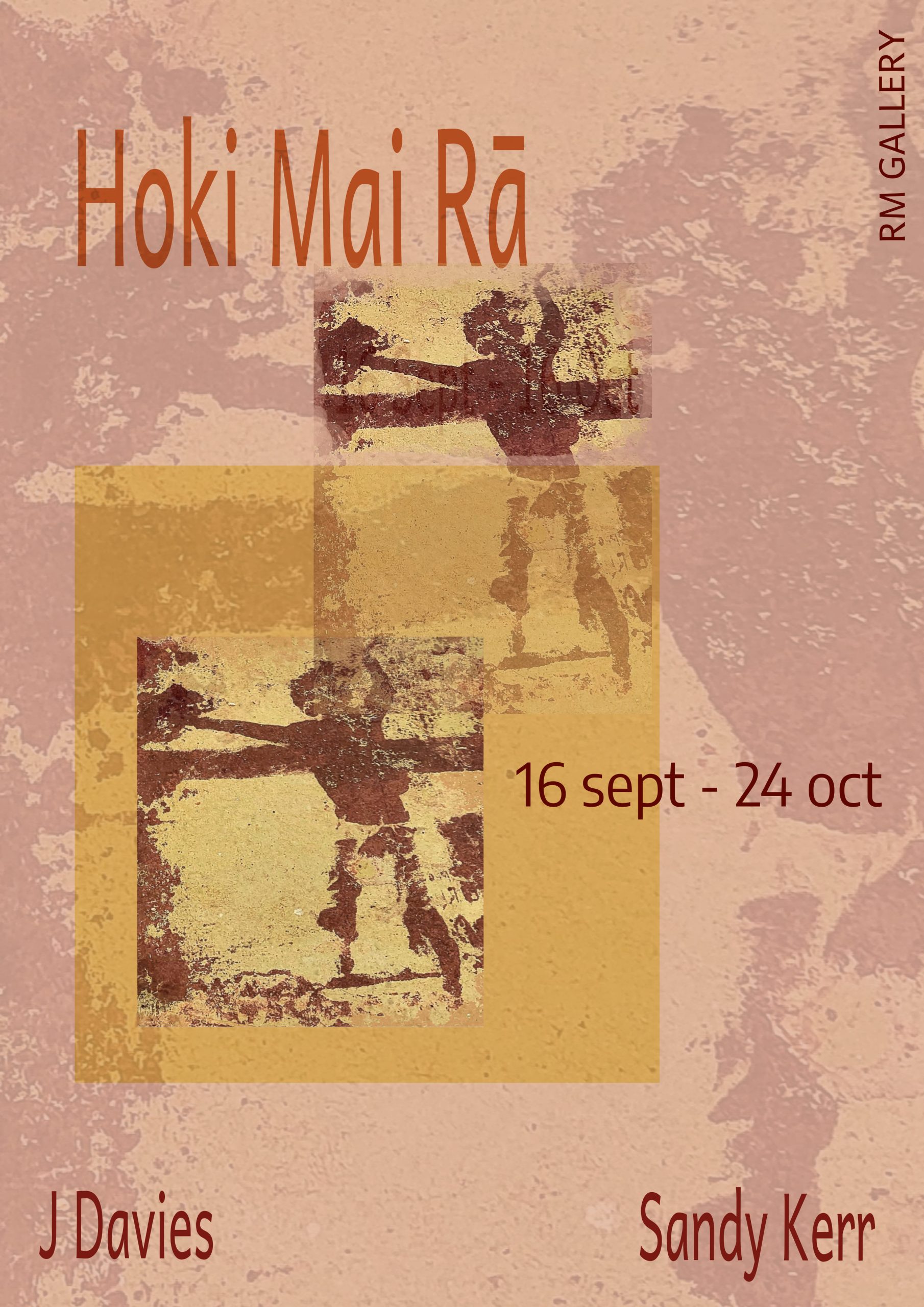
Hoki Mai Rā
J Davies and Sandy Kerr
Hoki Mai Rā (Return to Me) emerges from a period of quiet departure. Within six months, I lost both my Māori Koro and Australian Pa, each passing at 88. Two grandfathers, two lineages, returning to the same horizon.
The title comes from a line of waiata I remember my Koro singing throughout his life: hoki mai rā. Return to me. Here, return is not nostalgic but cyclical, where memories and relationships continually re-enter the present.
At its centre, Blue is the colour of the sky and thats where heaven is is a 25-minute stream of consciousness composed of Handycam footage recorded between 2018 and 2026. Gestures recur, landscapes reappear and laughter echoes across years. Drawing from te ao Māori understandings of time, the work carries whakapapa forward, guided by whenua and the whetū above.
Central to the work is returning to our marae for Koro’s Kawe Mate. Guided by my Aunty Sandy Kerr, we returned to our whānau whenua to harvest papa from the riverbanks where he was born and gather pumice from Lake Taupō for glaze. Together, we created pūtangitangi, Māori flutes formed from the whenua of our tīpuna, carrying breath across generations. Their making and sound connect body to land, past to present.
Aunty Sandy’s photo lithographs, made from images taken on the marae, extend this dialogue. They draw on whakapapa as relations between whenua, image, memory and mauri. The papa, blue raw and transformed red through firing, carries this becoming within the material itself.
Running throughout are queer and trans whānau, lovers and chosen kin. Fragments gather across Giza, Berlin, pride marches, protests, family feasts and shared rituals. Together they gesture toward return: whenua to whenua, whānau to whānau, bodies to one another.
Hoki Mai Rā speaks to growth through return. Grief moves in spirals. Repetition becomes remembrance. Layers become inheritance. What binds us is our capacity to remain in relation through care and connection.
16 September – 24 October 2026
Opening 16 September at 6:00pm
Neither Real Nor Imagined
Litia Tuiburelevu
/
Leading a Horse through the Cave’s Mouth
Shaun Naufahu
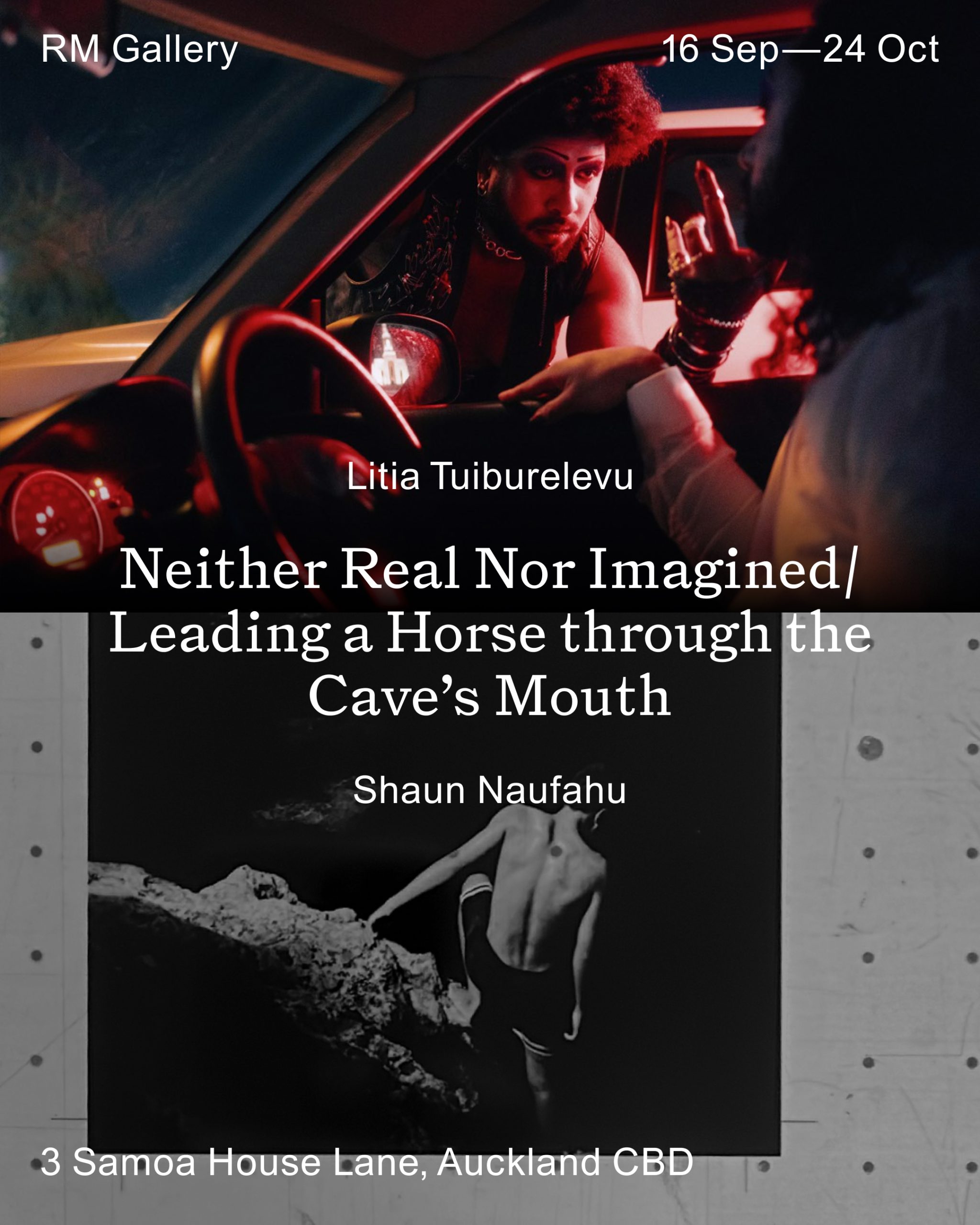
Neither Real Nor Imagined is a series of ten photographs presented as scenes from a fictional film of the same name. Shown as both film poster and cinematic stills, the images form part of the artist’s ongoing
exploration of the South Pacific Gothic genre.
Tāmaki Makaurau famously hosts the world’s largest Pacific Island
population, its overlapping diasporas layered onto the city’s Indigenous signature – a primordial mark repeatedly graffitied over by the ruptures of settler colonialism. This convergence gives the city its own noirish Gothic mythos, unfolding across the domestic sphere, the Denny’s Manukau car
park, and the state house at 3 Roseman Avenue, Mt Roskill. It is a world steeped in paradox: beautiful and brutal, an urban necropolis haunted by religious repression, sexual deviance, and vampiric gentrification. These visual tableaux collapse the distinction between reality and fiction, conjuring a dreamlike world of the surreal, sensual, and grotesque.
Drawing on the work of David Lynch and the film ephemera surrounding his 2001 masterwork Mulholland Drive, the images borrow from that benighted visual grammar, refracting it through a distinctly ‘Nesian Noir aesthetic.
/
Leading a Horse through the Cave’s Mouth is a series of fourteen light-sensitive photopolymer plates, presenting various views of the village Haveluliku, Tongatapu. The work draws from the site of ‘Anahulu
Hoosi—a small cave on the edge of the village, named so after Naufahu’s grandfather managed to fit a large horse through the narrow cave’s mouth in order to let it drink.
Part of a continued enquiry into the visual syntax of the village, the work is an attempt to re-connect to the existing forms of meaning-making, and how story, both sacred and mundane, becomes encoded into collective memory.
The awkward fidelity of the plates recreates the opaque and degraded views of icons littered throughout homes across Haveluliku. Borrowing this familiar form from the village, they imagine the possibility of depicting more recent ancestors and memories; amplifying the sacred
and deified through the unremarkable and humorous.
Various Rooms: RM 1997 to 2022 (RM25)
Available now
Take a look inside here
RM25 is a non-exhaustive snapshot of RM, a selection of scans and screenshots from the archives presented in broadly chronological order.
It’s a book full of posters, photos, plans, invites, and a few letters and emails from the early rm3 days (and rm212, rm401, and rm103) through to the current form of RM.
RM25 is 226 pages, softcover, A5 size. Only 200 copies printed.
Priced at $40 per copy, with all proceeds going to RM.
Payment will be via bank transfer.
Shipping will be around $6 for orders placed within NZ.
For overseas orders, get in touch with us to confirm shipping costs.
Pick up a copy at RM, or order a copy here.
